Posts

MAHA PURANAS - INTRODUCTION : 1.

Image
06/08/2019 Maha Puranas -1. Introduction : 1. The word Puranas  literally means "ancient, old", and it is a vast genre of Indian literature about a wide range of topics, particularly myths, legends and other traditional lore. Composed primarily in Sanskrit, but also in regional languages, several of these texts are named after major Hindu deities such as Vishnu, Shiva and Devi. The Puranas genre of literature is found in both Hinduism and Jainism. The Puranic literature is encyclopedic, and it includes diverse topics such as cosmogony, cosmology, genealogies of gods, goddesses, kings, heroes, sages, and demigods, folk tales, pilgrimages, temples, medicine, astronomy, grammar, mineralogy, humor, love stories, as well as theology and philosophy. The content is highly inconsistent across the Puranas, and each Purana has survived in numerous manuscripts which are themselves inconsistent. The Hindu Puranas are anonymous texts and likely the work of many authors over the cen...

GLORY OF LORD SIVA : 5. SWAMI SIVANANDA

Image
20/06/2019 5. PANCHAKSHARA NAMAVALI : Sivaya Nama Om Sivaya Namah; Sivaya Nama Om Namah Sivaya. Siva Sambho Sadasiva, Sambho Sadasiva, Sambho Sadasiva Bhum Bhum Bhum. Hara Hara Siva Siva Sambho, Hara Hara Siva Siva, Hara Hara Sambho, Siva Siva Sambho. Rudra is the destructive aspect of Siva. There are eleven Rudras in the cosmic hierarchy. Esoterically the Pranas and the mind represent the eleven Rudras. Sri Hanuman is a manifestation or aspect of Siva only. THESE ARE THE 25 LILAS (SPORTIVE PLAYS) OR MANIFESTATIONS OF LORD SIVA. 1. Wearing of moon on the head. 2. Living with Uma Devi. 3. Riding on Nandi. 4. Tandava dancing with Kaali. 5. Marriage with Parvati. 6. Begging. 7. Burning of Manmatha or the God of Love. 8. Victory over Yama the God of death. 9. Burning of Tripuras. 10. Killing of Jalandarasura. 11. Killing of Gajasura. 12. Incarnation of Virabhadra. 13. Harihara. 14. Ardhanareesvara. 15. Trans- forming into Kirata. 16. Assuming the form of Kankala. 17. Ble...

GLORY OF LORD SIVA : 4. SWAMI SIVANANDA

Image
11/05/2019 4. JYOTIRLINGAS THE FOLLOWING ARE THE TWELVE JYOTIRLINGAS OF LORD SIVA: Somanath in Gujarat. Mallikarjuna in Srisaila Parvat in Andhra Pradesh. Mahakala in Ujjain in Madhya Pradesh. Omkaresvar on the banks of Narmada in Amalesvarm. Baijnath near Gaya (Paralya). Naganath in Southern India. Kedarnath in Himalayas, Uttar Pradesh. Tryambak, near the source of the Godavari in the Nasik District, Maharashtra. Ramesvaram, in Ramnad district, Tamil Nadu. Bhima Sankar, near Poona. Visvanath in Benares. Grishnesvar (Gokarna) in Karwar district, Karnataka. Even if people remember these 12 places both morning and evening, the sins of seven births will be destroyed. In Southern India, there are five famous Siva Lingas which represent the five elements. In Shiyali, Tanjore district, there is Prithvi Lingam. In Tiruvana Koil, Trichinopoly district, there is Appu Lingam. The Lingam is always in water. Tiruvana Koil is otherwise known as Jambukesvaram...

GLORY OF LORD SIVA : 3. SWAMI SIVANANDA

Image
26/04/2019 3. Kailas hills in Tibet are a huge range with a central, beautiful, naturally carved and decorated shining peak, eternally clad with silvery snow 22, 980 feet above sea-level. Some take the height to be 22, 028 feet. This particular peak is in the form of a natural, huge Siva Linga (Virat Form). This is worshipped as the form of Lord Siva from a distance. There is neither a temple nor a Poojari nor a daily Pooja there. I had the fortune to have Darshan of Kailas through the grace of Lord Siva on July 22, 1931. I even climbed with panting breath to the foot of Kailas peak where the Indus takes its origin. It is a very picturesque, soul-stirring scenery. You will have to ascend from Didipha Gupha, the first halting stage in Parikrama of Kailas. The Indus gushes out as a small streamlet through blocks of ice from behind the back portion of Kailas peak. Though in the pictures of Lord Siva it is shown that the Ganga flows from His head, it is really the Indus that takes...

GLORY OF LORD SIVA : 2. SWAMI SIVANANDA

Image
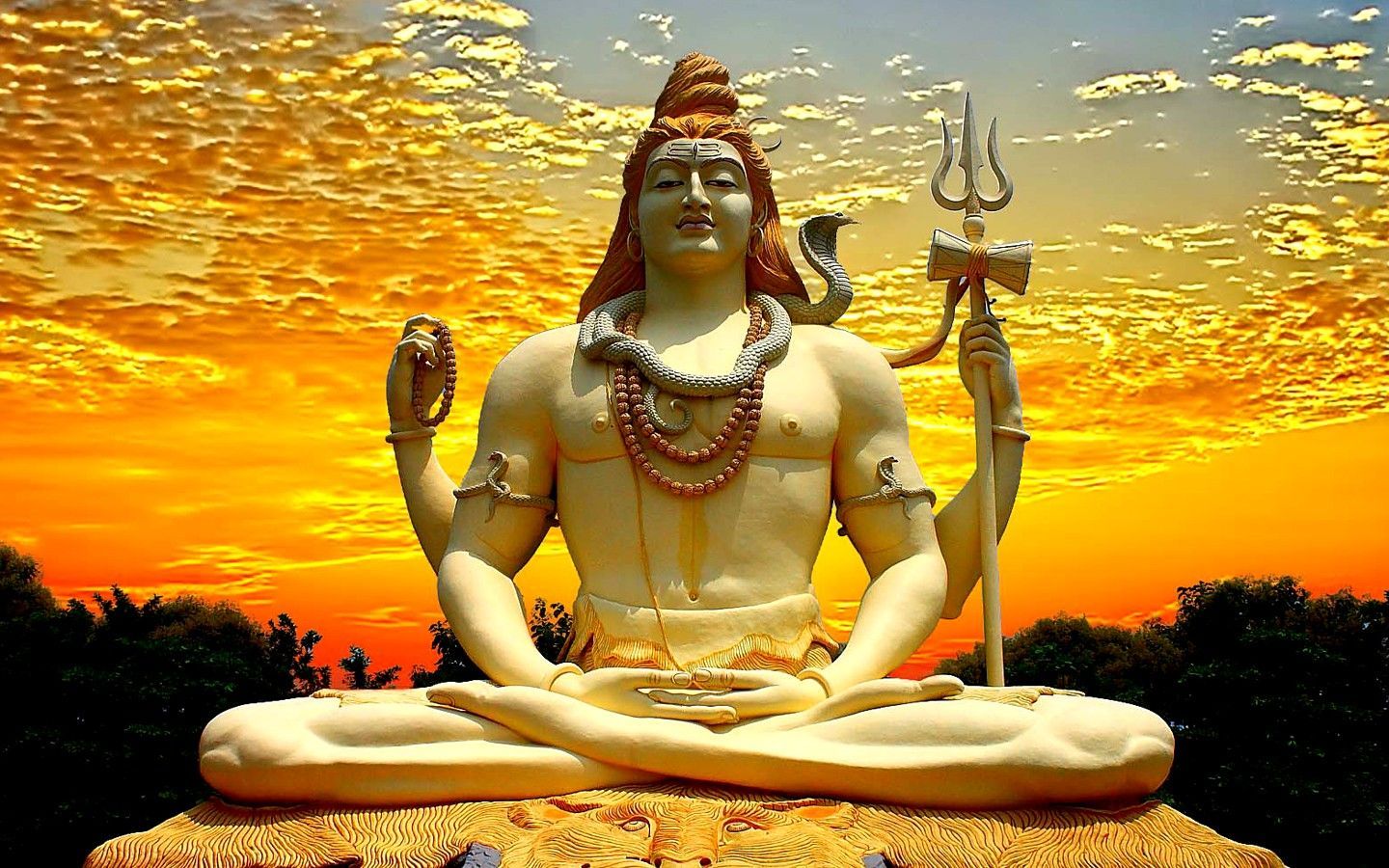
29/03/2019 2. Lord Siva represents the destructive aspect of Brahman. That portion of Brahman that is enveloped by Tamo-Guna-Pradhana-Maya is Lord Siva who is the all-pervading Isvara and who also dwells in Mount Kailas. He is the Bhandar or store-house for wisdom. Siva minus Parvati or Kaali or Durga is pure Nirguna Brahman. With Maya (Parvati) He becomes the Saguna Brahman for the purpose of pious devotion of His devotees. Devotees of Rama must worship Lord Siva also. Rama Himself worshipped Lord Siva at the famous Ramesvaram. Lord Siva is the Lord of ascetics and Lord of Yogins robed in space (Digambara). His Trishul (trident) that is held in His right hand represents the three Gunas-Sattva, Rajas and Tamas. That is the emblem of sovereignty. He wields the world through these three Gunas. The Damaru in His left hand represents the Sabda Brahman. It represents OM from which all languages are formed. It is He who formed the Sanskrit language out of the Damaru sound. The wea...

GLORY OF LORD SIVA-1 : SWAMI SIVANANDA

Image
07/01/2019 Om. I bow with folded hands to Lord Siva, who is the Lord of the universe (Jagat-Pati), world’s Teacher (Jagad-Guru), who is the destroyer of Tripuras (three cities—egoism, lust and anger), who is the Lord of Uma (Uma Sankar), Gauri (Gauri Sankar), Ganga (Ganga Sankar), who is full of light (Jyotirmaya), knowledge and bliss (Chidanandamaya), who is the Lord of Yogins (Yogesvara), who is the storehouse of knowledge and who is known by various names as Mahadeva, Sankara, Hara, Sambhu, Sadasiva, Rudra, Sulapani, Bhairava, Uma Mahesvara, Nilakantha, Trilochana (the three-eyed), Tryambaka (the three-eyed), Visvanatha, Chandrasekhara, Ardhanarisvara, Mahesvara, Nila-lohita, Parama Siva, Digambara, Dakshinamurti, etc. How merciful He is! How loving and kind He is! He even wears the skulls of His devotees as a garland around His neck. He is an embodiment of renunciation, mercy, love and wisdom. It is a mistake to say that He is the destroyer. Lord Siva in reality is the rege...

Lord Krishna : The Supreme Lord : 11.

Image
17/11/2018 11. Call of the Flute : Krishna’s flute is the symbol of Freedom or Pranava. It is this flute that attracted the devoted Gopis, the maidens of Vraja, to meet their beloved Lord on the banks of the sacred Jumna. The sound of this divine flute thrilled the heart with rapturous delight and instilled new life and joy. It produced God-intoxication in all beings and infused life even in insentient objects. The sweetness of the music was unsurpassed. He who heard once the music of Krishna’s flute cared not for the nectar of heaven or the bliss of Moksha. The flute and its music had stirred the souls of the Gopis. They were not masters of themselves. The world was nothing to them. They felt irresistibly drawn towards Sri Krishna. They had neither shame nor fear in leaving their homes. There was a soul-awakening in them. Their mind was not of this world. Their husbands and brothers stopped them in vain. Who can resist the torrent of divine love for the Lord? The love that ...